







If you run a website, sell products online, or manage a brand’s digital presence, you’ve likely faced this question at some point: should you invest in paid traffic, or focus your energy on organic traffic? It’s one of the most debated topics in digital marketing, and for good reason — both approaches can drive visitors to your site, but they work in fundamentally different ways, come with different costs, and deliver different long-term value.
The truth is, there’s no single “better” answer that applies to every business. The right choice depends on your budget, timeline, industry, and goals. In this article, we’ll break down what paid and organic traffic actually mean, compare their strengths and weaknesses, and help you figure out which strategy — or combination of strategies — makes the most sense for you.
What Is Organic Traffic?
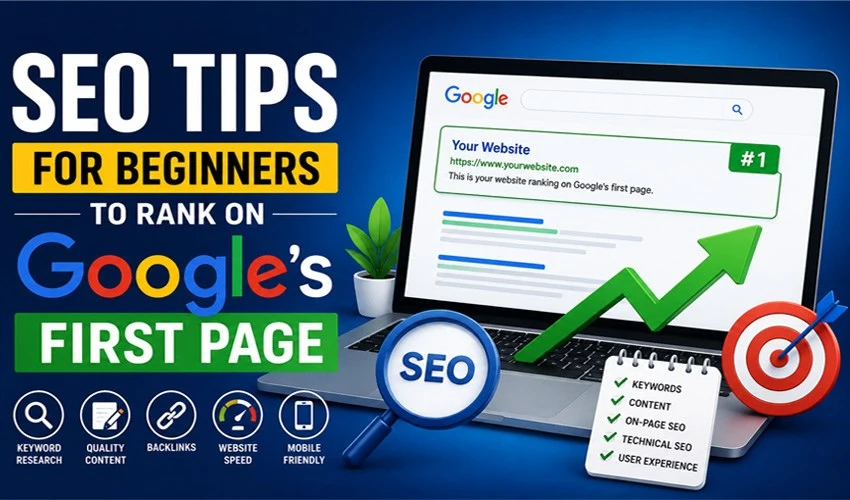
Organic traffic refers to visitors who land on your website through unpaid search engine results. When someone types a query into Google, Bing, or another search engine and clicks on your website because it appeared naturally in the results (not as an ad), that’s organic traffic. This traffic is earned through search engine optimization (SEO) — creating high-quality content, optimizing keywords, building backlinks, and improving technical site performance so search engines rank your pages higher.
Organic traffic isn’t limited to search engines alone. It can also include visitors who find you through social media shares, referral links, or word-of-mouth recommendations, as long as you didn’t pay directly for that specific click.
What Is Paid Traffic?
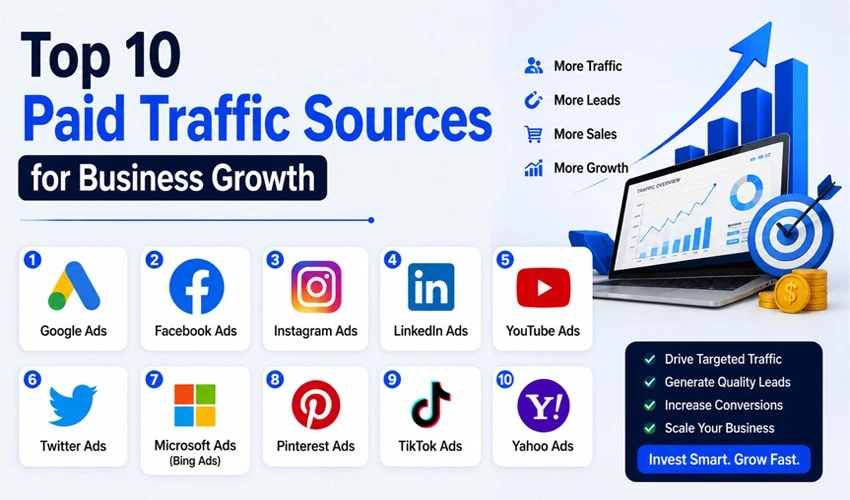
Paid traffic, on the other hand, is exactly what it sounds like — traffic you pay for. This includes pay-per-click (PPC) advertising through platforms like Google Ads, social media ads on Facebook, Instagram, LinkedIn, or TikTok, display ads, and sponsored content. With paid traffic, you bid on keywords or audience segments, and every time someone clicks your ad, you pay a fee.
Paid traffic offers immediate visibility. As soon as your campaign goes live and your budget is approved, your ads can appear at the top of search results or in front of your target audience on social platforms.
Key Differences Between Paid and Organic Traffic
1. Speed of Results
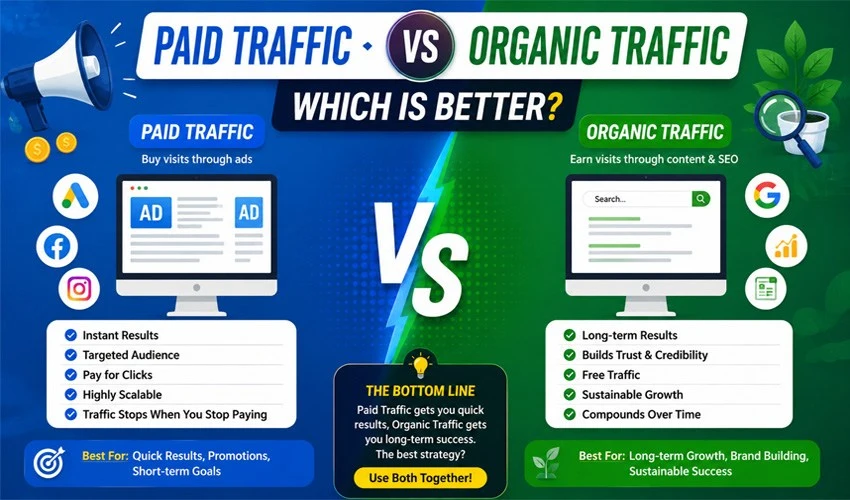
This is perhaps the starkest difference between the two. Paid traffic delivers instant results. Launch a campaign today, and you could see visitors — and potentially conversions — within hours. This makes paid traffic ideal for product launches, time-sensitive promotions, or businesses that need quick wins.
Organic traffic, by contrast, is a marathon, not a sprint. SEO efforts often take three to six months, sometimes longer, before you start seeing meaningful movement in rankings and traffic. Search engines need time to crawl, index, and evaluate your content’s authority and relevance before rewarding it with higher rankings.
2. Cost Structure
Paid traffic requires ongoing financial investment. The moment you stop paying, your traffic stops almost immediately. There’s no residual benefit once the budget runs out — it’s a pay-to-play model that requires continuous funding to sustain visibility.
Organic traffic requires upfront investment in content creation, SEO tools, and possibly hiring specialists, but once you rank well, that traffic can continue flowing for months or years with comparatively minimal maintenance. This makes organic traffic more cost-effective over the long run, even though it demands patience and consistent effort upfront.
3. Trust and Credibility
Studies have consistently shown that users tend to trust organic search results more than paid advertisements. Many people have grown accustomed to skipping over ads, associating them with sales pitches rather than genuine, helpful information. Organic listings, especially those appearing on the first page of search results, are often perceived as more credible because they’ve “earned” their spot through relevance and quality.
That said, paid ads still hold value, particularly for brand awareness and when the ad copy directly addresses a specific need or pain point. Well-crafted ads with clear value propositions can still convert exceptionally well.
4. Sustainability and Long-Term Value
Organic traffic tends to compound over time. A well-optimized blog post or landing page can continue attracting visitors for years without additional spending, creating a snowball effect where your site’s authority grows and rankings improve for other content too.
Paid traffic doesn’t have this compounding effect. It’s transactional — you pay, you get clicks, and when the campaign ends, so does the traffic. There’s no lasting equity built unless that paid traffic converts into organic engagement, such as social shares, backlinks, or returning visitors who eventually recommend you to others.
5. Targeting and Control
Paid advertising offers precise targeting capabilities. You can define your audience by demographics, interests, location, device, browsing behavior, and even the time of day they’re most active. This level of granularity allows for highly tailored campaigns that reach exactly the people most likely to convert.
Organic traffic offers less direct control over who sees your content. While keyword research and content strategy can help you attract a relevant audience, you can’t hyper-target specific demographics the way you can with paid ads.
6. Measurability
Both channels offer measurable data, but paid traffic often provides clearer, more immediate metrics — cost per click, conversion rate, return on ad spend, and so on — because you’re paying for a defined outcome. Organic traffic metrics like keyword rankings, organic sessions, and bounce rates are equally trackable through tools like Google Search Console and Google Analytics, but attributing specific conversions to specific SEO efforts can be more complex due to the longer, more indirect customer journey.
The Pros and Cons at a Glance
Paid Traffic Pros:
- Immediate visibility and results
- Highly targeted audience segmentation
- Scalable — increase budget to increase reach
- Great for testing offers, messaging, and audiences quickly
Paid Traffic Cons:
- Traffic stops the moment spending stops
- Can become expensive, especially in competitive industries
- Lower perceived trust compared to organic listings
- Requires ongoing management and optimization
Organic Traffic Pros:
- Builds long-term, sustainable value
- Generally more cost-effective over time
- Higher trust and credibility among users
- Compounds with content and authority growth
Organic Traffic Cons:
- Takes significant time to see results
- Requires ongoing content creation and optimization
- Rankings can fluctuate with algorithm updates
- No guaranteed placement, unlike paid ads
Which One Should You Choose?
Rather than viewing this as an either-or decision, the smartest approach for most businesses is to use both strategies in tandem, tailored to your specific goals and timeline.
If you’re launching a new product, testing a market, or need quick revenue to sustain operations, paid traffic can provide the fast results you need while your organic strategy matures in the background. Paid campaigns can also help you gather valuable data — like which keywords or messaging resonate most — that can inform your organic content strategy.
Meanwhile, if you’re building a brand for the long haul and want sustainable, cost-efficient growth, investing in organic traffic through quality content, technical SEO, and link building will pay dividends for years to come. Businesses with limited marketing budgets often find that organic traffic, while slower, delivers a better return on investment over time.
Many successful companies use a hybrid model: they run paid campaigns to generate immediate traffic and revenue while consistently investing in SEO and content marketing to build a durable organic presence. Over time, as organic traffic grows, they can often reduce their dependency on paid ads, redirecting that budget toward other growth initiatives.
Final Thoughts
There’s no universal winner in the paid traffic versus organic traffic debate. Paid traffic wins on speed, precision, and control, while organic traffic wins on trust, sustainability, and long-term cost-efficiency. The best strategy depends on your business stage, budget, and goals.
For most businesses, the ideal approach isn’t choosing one over the other — it’s strategically blending both. Use paid traffic to generate quick wins and gather insights, while simultaneously building a strong organic foundation that will continue delivering value long after your ad budget runs dry. By understanding the strengths of each channel, you can create a well-rounded digital marketing strategy that maximizes both immediate results and long-term growth.