








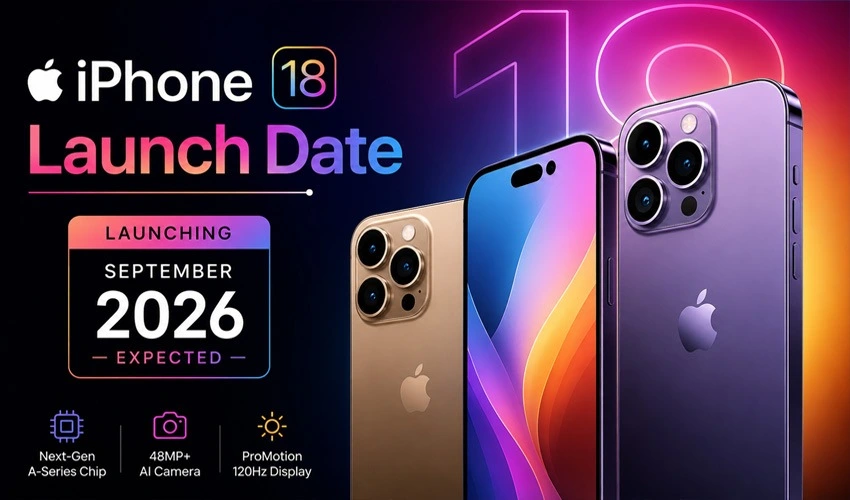
For nearly two decades, Apple’s iPhone launch calendar has followed a reliable rhythm: a September keynote, a full new lineup unveiled at once, and phones on shelves within a couple of weeks. This year, that pattern is reportedly breaking for the first time since Apple established its annual fall launch tradition. According to a wide range of supply chain reports and industry analysts, the iPhone 18 lineup is being split across two separate release windows — and depending on which model you’re waiting for, that could mean a significantly longer wait than usual.
Here’s a complete breakdown of when each iPhone 18 model is expected to arrive, why Apple is reportedly changing its release strategy, and what it means if you’re planning an upgrade.
Disclaimer: Apple has not officially confirmed any launch dates for the iPhone 18 lineup. Everything below is based on current leaks, supply chain reporting, and analyst commentary, and is subject to change.
The Short Answer: Two Launch Dates, Not One
For the first time in Apple’s history of annual fall launches, the iPhone 18 series is expected to arrive in two separate waves:
- September 2026: The iPhone 18 Pro, iPhone 18 Pro Max, and Apple’s first foldable iPhone
- Spring 2027: The standard iPhone 18, the budget-friendly iPhone 18e, and a second-generation iPhone Air
If you’re planning to buy a Pro-tier iPhone, nothing changes much for you this year — you’ll get your new phone on Apple’s usual fall schedule. But if you typically buy the standard iPhone, you’ll be waiting considerably longer than usual, likely until sometime between March and May 2027.
Why Is Apple Splitting the Launch?
Multiple independent reports point to a mix of technical and strategic reasons behind this unprecedented change.
Manufacturing complexity. Apple is introducing its first foldable iPhone this cycle, alongside a new 2-nanometer chip architecture across the lineup. Both represent substantial manufacturing challenges, and reports suggest Apple wants to concentrate its engineering and supply chain resources on getting these premium products right, rather than simultaneously managing a six-device rollout across every tier.
Spreading out production. With the iPhone 18 lineup reportedly growing to six distinct devices — Pro, Pro Max, Fold, standard 18, 18e, and Air 2 — building everything at once would place enormous strain on Apple’s manufacturing partners. A staggered release lets Apple spread component sourcing and assembly across more months instead of compressing it all into a single quarter.
Marketing strategy. There’s also a competitive angle. Analysts suggest that launching premium and affordable models simultaneously, as Apple has for years, allows cost-conscious buyers to directly compare a $1,300+ Pro model against a cheaper standard model and often choose the less expensive option. By giving the Pro models and foldable iPhone their own dedicated spotlight in the fall, Apple may be hoping to nudge early adopters and premium buyers toward the pricier hardware first. The standard and budget models would then get their own spring spotlight aimed more directly at price-conscious buyers and Android switchers, without a shinier Pro model in the room to overshadow them.
Corroboration from supply chain sources. This isn’t purely speculative at this point. Comments from Largan Precision — a major camera component supplier for Apple — during a shareholders’ meeting reportedly referenced a “major U.S. customer” delaying a new model’s launch to the first quarter of 2027 and shifting component procurement later in the year. While Largan didn’t name Apple directly, the timing and context align closely with existing rumors about the iPhone 18’s delayed release.
iPhone 18 Pro and Pro Max: September 2026
The Pro-tier models are on track for Apple’s traditional fall schedule. Based on Apple’s typical pattern and recent reporting, the expected timeline looks like this:
- Announcement event: Around September 8 or 9, 2026
- Pre-orders open: Around September 11, 2026
- Devices ship/arrive in stores: Around September 18, 2026
These dates aren’t confirmed by Apple, but they follow the same cadence Apple has used for years, and current production reports suggest the iPhone 18 Pro has already moved into production validation testing — generally a sign that a device remains on track for its expected launch window.
Alongside the Pro and Pro Max, Apple’s long-rumored first foldable iPhone is also expected to debut at this same September event. Some reports suggest the foldable could be unveiled in September but not actually ship until later, possibly December, while the Pro models ship on the standard timeline. Either way, the foldable is expected to anchor this fall’s announcement as Apple’s most attention-grabbing hardware release in years.
iPhone 18 and iPhone 18e: Spring 2027
The standard iPhone 18 and the more affordable iPhone 18e are expected to arrive roughly six months later, sometime in spring 2027 — with various reports narrowing that window to March through May 2027. A second-generation iPhone Air is also expected to join them in this spring wave, rather than launching alongside the Pro models as many had initially anticipated.
This represents an unprecedented 18-month sales cycle for the current iPhone 17, since it will remain Apple’s standard model on shelves until the iPhone 18 finally replaces it next spring — nearly twice as long as the usual 12-month cycle.
If you’re someone who typically buys the standard iPhone rather than paying Pro pricing, this is the most important date to keep in mind: you won’t be able to buy a new standard iPhone this September. Your options during the fall window will be limited to the Pro, Pro Max, or the new foldable — all of which carry premium pricing well above what standard iPhone buyers are used to spending.
What’s Changing Under the Hood
While this article focuses on timing, it’s worth briefly noting what’s driving some of this complexity, since the hardware changes help explain why Apple may need the extra runway.
The iPhone 18 Pro and Pro Max are expected to introduce Apple’s first 2-nanometer chip, the A20 Pro, offering meaningful performance and efficiency gains over the current 3nm A19 generation. The standard iPhone 18 and iPhone 18e are expected to use a related but less powerful A20 chip, also built on the 2nm process, alongside a possible RAM bump — though reports on the exact RAM figure have varied, with some early leaks suggesting 12GB and more recent reports suggesting a more modest 9GB for the standard models.
Camera hardware is also seeing significant attention this cycle, particularly a rumored variable aperture lens for the Pro models — a first for the iPhone lineup and a meaningfully more complex component to manufacture than a standard fixed-aperture lens. Combined with the entirely new foldable form factor, it’s easy to see why Apple might want extra time to get everything right before extending the rollout to its full six-device lineup.
Should You Wait for the iPhone 18, or Buy Now?
The right answer depends heavily on which tier of iPhone you’re after.
If you want a Pro-tier phone: September 2026 is your window, same as always. There’s no reason to wait longer than usual — the iPhone 18 Pro and Pro Max are expected to arrive right on Apple’s traditional fall schedule.
If you typically buy the standard iPhone: This is where the calculus changes. If you need a new phone before spring 2027, your choices this fall will be the Pro, Pro Max, or the foldable — all priced well above what a standard iPhone usually costs. If your current phone can hold on until spring, waiting for the iPhone 18 will get you Apple’s new 2-nanometer chip and other under-the-hood improvements at a non-Pro price point, rather than settling for the aging iPhone 17 for several more months.
If you’re considering the iPhone Air: The second-generation Air is also expected in the spring 2027 wave rather than alongside the Pro models, so Air buyers face the same extended wait as standard-model buyers.
If budget is the priority: The iPhone 18e is expected to continue Apple’s “e” series tradition of offering a genuinely current chip and modern display at a lower price point, similar to how the iPhone 17e positioned itself in the current lineup. If pricing patterns hold, it should remain the most affordable way to get into a new iPhone once it arrives next spring.
The Bottom Line
For the first time in the iPhone’s history, “iPhone 18” won’t mean one single launch date — it means two. The iPhone 18 Pro, iPhone 18 Pro Max, and Apple’s first foldable iPhone are expected in September 2026, right on Apple’s usual schedule. The standard iPhone 18, the iPhone 18e, and a second-generation iPhone Air are expected to follow roughly six months later, in spring 2027.
Until Apple confirms these plans officially, all of this should be treated as a well-corroborated but unconfirmed leak. If the pattern holds, though, it marks one of the most significant changes to Apple’s product strategy in over a decade — and one that buyers of every budget will want to plan around carefully before deciding when, and which iPhone, to buy next.