







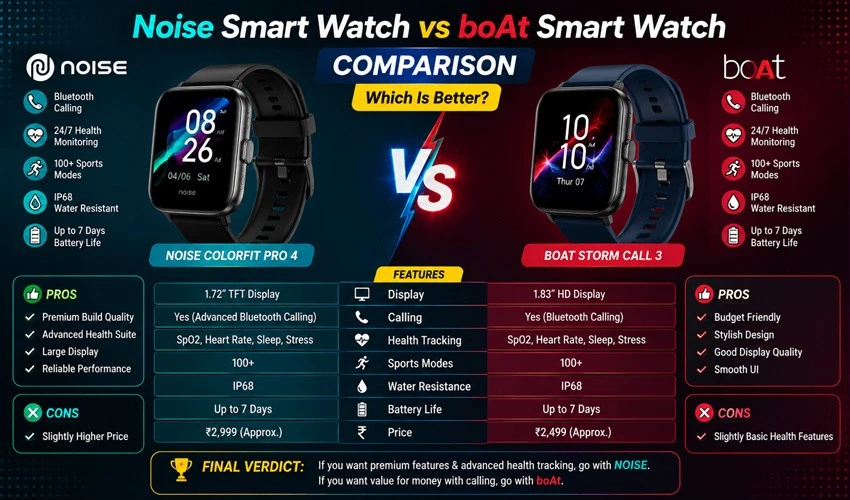
In India’s booming wearable market, Noise and boAt stand out as two of the most popular budget smartwatch brands. Both offer stylish designs, fitness tracking, Bluetooth calling, and long battery life at pocket-friendly prices. But which one should you buy in 2026? The answer depends on your priorities: refined health tracking and smoother software (Noise) or sporty aesthetics and aggressive pricing (boAt).
Brand Overview and Market Position
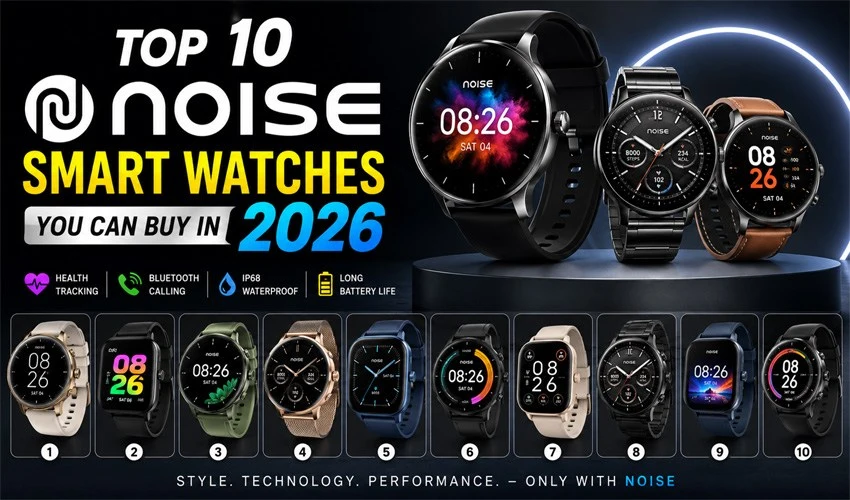
Noise and boAt have carved out significant niches in India’s affordable smartwatch segment, often competing directly in the ₹1,000–₹5,000 price range. Noise positions itself as a lifestyle and wellness-focused brand, emphasizing accurate sensors, clean user interfaces, and premium displays in mid-range models. In contrast, boAt targets a younger, style-conscious audience with rugged, sporty designs, bass-heavy audio accessories, and value-for-money wearables.
While both brands release frequent updates and new models, Noise generally leads in software polish and health ecosystem integration, whereas boAt excels in design variety and aggressive launch pricing.
Design and Build Quality
Design philosophy is one of the clearest differentiators between the two brands.
- Noise: Favors sleek, minimal, and often premium-looking designs. Many models feature square or rounded-square dials with slim profiles, ideal for office wear or casual outings. Build quality is generally solid, with IP68 or 5ATM water resistance in most models.
- boAt: Leans into bold, sporty, and rugged aesthetics. You’ll find chunkier cases, textured straps, and vibrant color options that appeal to fitness enthusiasts and students. Durability is a strong suit, with IP68 ratings and dust resistance in select models.
If you prefer a watch that blends into professional settings, Noise has the edge. For gym-goers or outdoor lovers who want a statement piece, boAt’s designs are more compelling.
Display Technology and Visual Experience
Display quality directly impacts usability, especially for reading notifications, checking stats, or customizing watch faces.
- Noise: Offers a wider range of AMOLED panels in premium models (e.g., NoiseFit Evolve, ColorFit Ultra series), delivering deeper blacks, better contrast, and more vibrant colors. Even LCD/TFT models often come with higher brightness (up to 550 nits) for outdoor visibility.
- boAt: Primarily uses HD LCD or TFT displays in budget and mid-range segments. While colors are punchy and touch response is decent, AMOLED options are rarer and usually reserved for higher-end models. Brightness levels are typically lower, which can affect readability in direct sunlight.
For users who spend time outdoors or value crisp visuals, Noise’s display lineup is superior. boAt’s screens are adequate for indoor use but lag in premium feel.
Health and Fitness Tracking
Both brands offer core health metrics like heart rate, SpO₂, sleep tracking, and stress monitoring. However, accuracy and ecosystem support differ.
- Noise: Known for more refined sensors and better algorithm tuning. Features like AI-powered wellness insights, cycle tracking, and guided breathing are common in mid-to-high-end models. The Noise app provides detailed historical data and integrates well with third-party health platforms.
- boAt: Focuses on breadth over depth, with some models boasting 700+ sports modes. Basic tracking is reliable for casual users, but sensor accuracy can be inconsistent during intense workouts. The Crest app is functional but less polished than Noise’s ecosystem.
If health data accuracy matters (e.g., for training or medical awareness), Noise is the safer bet. boAt suits users who want variety in workout modes without needing clinical-grade precision.
Smart Features and Connectivity
Bluetooth calling is now standard across both brands, but implementation varies.
- Noise: Uses TruSync or similar tech for clearer call audio and faster pairing. Features like Smart DND, voice assistants, and cloud-based watch faces (150+) enhance daily usability. Notifications are well-organized, and call logs/contacts sync reliably.
- boAt: Offers mic-and-speaker calling with decent clarity. Some models allow saving contacts directly on the watch. Voice assistants and custom watch faces (100+) are available, but the interface can feel cluttered.
Noise provides a smoother, more intuitive smart experience. boAt gets the job done but lacks the same level of refinement.
Battery Life and Charging
Battery performance is a key selling point for budget smartwatches.
- Noise: Typically delivers 5–7 days on a single charge, with some models lasting up to 10 days under light use. Fast charging is available in premium variants.
- boAt: Often edges out Noise with 7–10 days of battery life, even with Bluetooth calling enabled. Some models claim up to 15 days in basic mode. Charging speeds are comparable.
For users who hate frequent charging, boAt’s longer endurance is a win. Noise still offers solid backup, especially if you disable calling.
Price and Value Proposition
Pricing is where both brands fiercely compete.
- Noise: Ranges from ₹1,199 (entry-level LCD) to ₹7,499 (AMOLED flagship). Mid-range models (₹2,500–₹4,000) offer the best balance of features and build quality.
- boAt: Starts as low as ₹999 for basic models, with most popular watches between ₹1,299–₹3,999. Premium variants rarely exceed ₹5,000.
boAt wins on absolute affordability, but Noise often provides better long-term value through superior displays, sensors, and software.
Software Ecosystem and App Support
The companion app experience can make or break daily usability.
- Noise: The NoiseFit app is clean, data-rich, and regularly updated. It offers detailed health trends, firmware updates, and customization options. Syncing is fast and reliable.
- boAt: The Crest app is functional but can feel bloated with ads or promotional content. Data presentation is basic, and occasional sync issues are reported by users.
For a seamless, ad-free experience, Noise’s ecosystem is more user-friendly.
Durability and Water Resistance
Both brands cater to active lifestyles with robust build standards.
- Noise: Most models carry IP68 or 5ATM ratings, making them safe for swimming and rain. Build materials include aluminum alloy and reinforced polycarbonate.
- boAt: Also offers IP68 ratings, with some models adding dust resistance. Cases are often thicker, providing extra shock absorption for sports.
Durability is a tie—both brands handle daily wear and tear well.
Who Should Choose Noise?
Pick a Noise smartwatch if you:
- Prioritize accurate health tracking and sensor reliability.
- Want a premium display (AMOLED) and brighter screens.
- Prefer a clean, intuitive app with detailed analytics.
- Need a watch that looks professional in office settings.
- Value software updates and ecosystem integration.
Who Should Choose boAt?
Opt for a boAt smartwatch if you:
- Are on a tight budget and want maximum features per rupee.
- Love bold, sporty designs with rugged build quality.
- Need longer battery life (7–10+ days) even with calling enabled.
- Want access to 700+ sports modes for varied workouts.
- Don’t mind a slightly cluttered app interface for lower cost.
Final Verdict: Which Is Better?
Overall, Noise edges out boAt in 2026 for most users due to its superior display quality, more accurate health sensors, and polished software experience. It’s the better choice if you care about data reliability, daily usability, and a premium feel without paying flagship prices.
However, boAt remains a strong contender for budget-first buyers who prioritize battery life, rugged design, and access to a wide range of sports modes. If you’re a student, gym enthusiast, or someone who wants a stylish secondary watch, boAt delivers excellent value.
Quick Decision Guide
| Priority | Winner | Why |
|---|---|---|
| Display Quality | Noise | AMOLED options, higher brightness, better outdoor visibility |
| Health Accuracy | Noise | Refined sensors, better app analytics, AI wellness features |
| Battery Life | boAt | 7–10+ days even with calling; some models claim 15 days |
| Design & Style | boAt | Sporty, rugged, youth-oriented aesthetics |
| Price (Entry-Level) | boAt | Starts under ₹1,000; more models under ₹1,500 |
| Software & App | Noise | Clean, ad-free, data-rich NoiseFit app |
| Sports Modes Variety | boAt | Up to 700+ modes vs. Noise’s 100+ |
| Overall Value | Noise | Better balance of features, build, and long-term usability |
Buying Tips for 2026
- Check Latest Models: Both brands launch new watches quarterly. Look for 2025–2026 releases with updated sensors and brighter displays.
- Read User Reviews: Sensor accuracy and app stability can vary by model. Check recent Amazon/Flipkart reviews for real-world feedback.
- Consider Warranty: Both offer 1-year warranties, but Noise’s service network is slightly more organized in metro cities.
- Wait for Sales: During festivals (Diwali, Dhanteras), both brands drop prices by 20–40%.
- Test Comfort: Try straps in-store if possible—boAt’s bulkier cases may not suit smaller wrists.
Final Thoughts
In the Noise vs boAt smartwatch battle, there’s no universal “best”—only what’s best for your needs. Noise wins on refinement, accuracy, and premium feel, making it ideal for health-conscious professionals and tech-savvy users. boAt triumphs in affordability, battery endurance, and bold styling, appealing to students, fitness newcomers, and budget shoppers.
If you can stretch your budget slightly, Noise’s mid-range models (₹2,500–₹4,000) offer the sweet spot of features and quality. But if every rupee counts, boAt’s sub-₹1,500 options deliver surprising functionality without major compromises.
Ultimately, both brands have democratized smartwatch access in India. Your choice should align with whether you value precision and polish (Noise) or price and personality (boAt).