








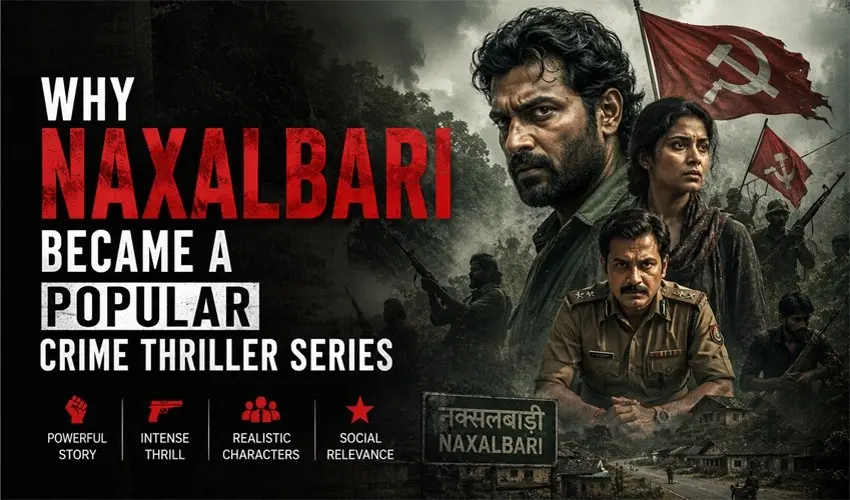
Indian OTT platforms have given birth to countless crime dramas over the past several years, but only a handful manage to strike a chord with viewers the way Naxalbari did. Released on ZEE5, this Hindi-language web series quickly found its footing among fans of gritty, socially rooted thrillers. It wasn’t just another cop-versus-criminal story—it was a layered narrative that blended personal vendetta, political intrigue, and one of India’s most complex socio-political movements into a single, binge-worthy package. Understanding why Naxalbari resonated with so many viewers requires looking at several factors working together: its subject matter, its cast, its writing, and the cultural moment in which it arrived.
A Story Rooted in Real History
One of the biggest reasons Naxalbari stood out is its connection to a genuinely significant chapter of Indian history. The show takes its name from the 1967 peasant uprising in West Bengal, an event that gave birth to the Naxalite movement and continues to shape debates around land rights, tribal welfare, and armed insurgency in parts of India even today. Rather than simply borrowing the name for dramatic weight, the series uses the ongoing Naxal-Maoist conflict in Gadchiroli, Maharashtra, as its central backdrop.
This choice gave the show a sense of gravity that separates it from generic thrillers. Audiences weren’t just watching a fictional cat-and-mouse chase—they were being pulled into a world shaped by real ideological battles, forest insurgencies, and the uneasy relationship between the state and marginalized communities. For viewers who follow Indian current affairs or have some awareness of the Naxal movement, this added a layer of authenticity that made the stakes feel real, even when the plot took dramatic liberties.
At the same time, the series never positions itself as a documentary. It uses this backdrop as a canvas for a personal story, which is part of why it appealed to a broad audience rather than only those interested in political history.
A Gripping Central Plot
At its core, Naxalbari follows Raghav Joshi, a Special Task Force officer assigned to stop a resurgence of Naxal activity in Gadchiroli after an MLA’s convoy is attacked and destroyed. What begins as a straightforward law-and-order assignment spirals into something far more personal as Raghav digs deeper into the conspiracy. He soon discovers that the uprising is not confined to the forests—it stretches into boardrooms, political offices, and unexpected corners of his own past.
This structure—starting with an explosive incident and slowly peeling back layers of conspiracy—is a tried-and-tested thriller formula, but Naxalbari executes it with enough twists to keep viewers hooked. The introduction of a mining project backed by a powerful industrialist adds a corporate greed angle to the insurgency story, echoing real-world tensions between resource extraction, tribal displacement, and armed resistance in central India. This multi-layered conflict, where no single side is entirely right or wrong, is part of what made the storyline feel richer than a typical hero-versus-villain narrative.
The show also plays with the protagonist’s personal history, hinting that his past is intertwined with the very people he’s hunting. This blending of the professional mission with an emotional, almost vengeance-driven undertone gave the plot an added pull, encouraging viewers to keep watching just to see how the pieces connected.
Strong Performances That Anchored the Drama
A crime thriller lives or dies by its performances, and this is an area where Naxalbari earned considerable praise. Rajeev Khandelwal, known for his intense screen presence in earlier television and film roles, took on the lead role of Raghav Joshi and delivered what many reviewers considered one of his most compelling performances. Critics highlighted how he balanced the toughness expected of an STF officer with visible emotional vulnerability, making Raghav feel less like an invincible action hero and more like a flawed, relatable man carrying his own scars.
Tina Datta and Aamir Ali, both making their digital debut with this project, brought additional weight to the ensemble. Datta played a translator working alongside government agencies, a character who becomes entangled in the investigation in ways that add emotional complexity to the plot. Ali took on the role of an industrialist whose business interests collide with the insurgency, giving the story its corporate antagonist. Supporting actors playing Naxal leaders were also noted for lending menace and conviction to their roles, which helped the insurgents feel like genuine ideological adversaries rather than one-dimensional villains.
This combination of a magnetic lead performance and a well-rounded supporting cast gave the show an emotional anchor. Even when the plot leaned into familiar thriller beats, the actors’ commitment kept audiences invested in the characters’ fates.
Tight Pacing and Bite-Sized Episodes
Streaming audiences today often reward shows that respect their time, and Naxalbari structured its episodes to run under thirty minutes each. This format worked in the show’s favor. Instead of padding out storylines with unnecessary subplots, the series kept its narrative tight, ensuring that each episode ended on a note designed to pull viewers into the next one.
This pacing decision matters more than it might seem. Many crime thrillers struggle with sagging middle episodes where momentum stalls, but shorter runtimes forced the writers to prioritize plot advancement and tension over filler. For viewers with limited time or those used to consuming content in quick sessions, this made Naxalbari an easy show to binge over a weekend, which likely helped word-of-mouth buzz spread faster after release.
Balancing Action With Social Commentary
What arguably separates Naxalbari from countless other regional crime thrillers is its attempt to present the Naxal movement with some nuance, rather than treating insurgents purely as antagonists to be eliminated. The series tries to humanize its Naxal characters to a degree, showing glimpses of the ideological convictions and grievances that drive them, even as the central plot follows a state agent working to dismantle their network.
This balancing act—delivering conventional action-thriller beats while gesturing toward the deeper socio-economic roots of insurgency—gave the show a talking point beyond its plot twists. Some viewers and critics appreciated this attempt at nuance, seeing it as a more honest depiction of a complicated conflict than typical “good cop versus terrorist” narratives. Others felt the show didn’t go far enough in exploring these themes, sticking closer to melodrama than genuine social critique. Either way, the ambition to engage with a real ideological conflict, rather than using it as a hollow backdrop, gave audiences something to discuss and debate, which often fuels a show’s popularity as much as its plot does.
Mixed but Engaged Critical Reception
Interestingly, part of what kept Naxalbari in conversation was its divisive critical reception. Some reviewers praised the tightly written plot and called it an edge-of-the-seat watch, while others felt the show leaned too heavily on abusive dialogue and predictable tropes borrowed from Bollywood-style confrontations. This split in opinion, rather than hurting the show, seemed to generate curiosity. When critics disagree sharply about a series, audiences often want to watch it themselves and form their own verdict.
Reviews also frequently singled out the performances as the show’s strongest asset, even when they had reservations about pacing or dialogue. This meant that even less favorable reviews still gave viewers a reason to tune in for the acting alone, which likely broadened the audience beyond just thriller enthusiasts.
Arriving at the Right Time
Timing played a role in the show’s traction as well. Naxalbari premiered in late 2020, during a period when OTT platforms in India were seeing a surge in viewership as audiences, confined largely to their homes, turned to streaming content for entertainment. Crime thrillers with strong regional flavor—shows exploring specific Indian conflicts, subcultures, and settings rather than generic urban crime stories—were gaining traction during this era, as seen with the success of several other India-specific crime dramas around the same time.
By setting its story in Gadchiroli and grounding it in the Naxal conflict, Naxalbari offered viewers something distinct from the usual metro-city cop dramas, tapping into a wave of interest in stories that explored lesser-seen corners of the country and its conflicts.
A Combination of Factors, Not a Single Reason
Ultimately, no single element explains why Naxalbari became a popular crime thriller series. It was the combination of a historically resonant premise, a tightly paced multi-layered plot, committed performances led by Rajeev Khandelwal, and a willingness to engage—however imperfectly—with the complexities of the Naxal movement. Add to this the show’s binge-friendly episode length and its release during a period of heightened OTT consumption, and it becomes clear why the series managed to carve out a dedicated audience.
For viewers who appreciate crime dramas that go beyond simple heist-or-chase formulas and instead root themselves in real socio-political tension, Naxalbari offered a compelling, if occasionally uneven, viewing experience—one that continues to be discussed among fans of Indian OTT thrillers.