








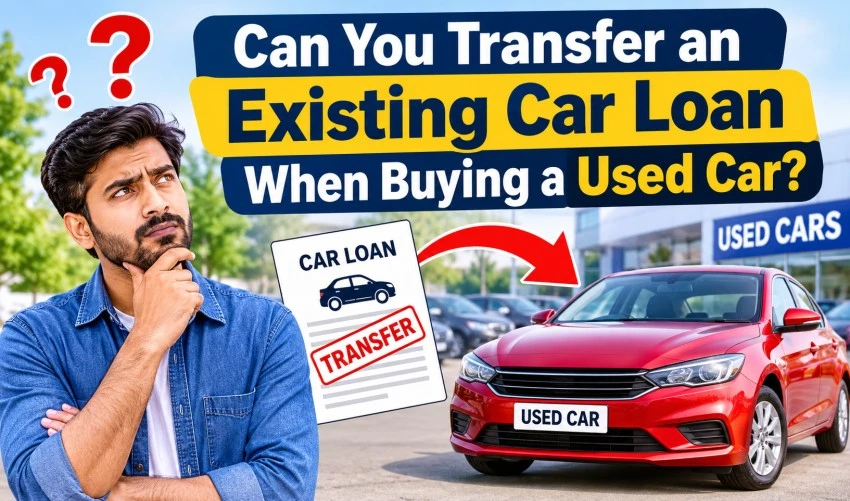
TLDR: An existing car loan can sometimes be transferred to a used car buyer, but it isn’t just a name change. The lender treats the buyer as a new borrower, checks their credit score and income, and releases the seller only once it is satisfied that the buyer can repay. Not every lender allows transfers, and the terms may change at approval. If the seller’s outstanding balance and the sale price don’t match, the difference has to be settled by the seller (if the balance is higher) or covered by the buyer through a top-up loan or a larger down payment (if it’s lower). For many buyers, a fresh loan is simpler and sometimes cheaper, so it’s worth comparing the total cost of both options, for example with a used car EMI calculator, before deciding.
The question of whether an existing car loan can be transferred from the current owner to the buyer often comes up in used car purchase conversations. The answer is less straightforward than most people expect when they first encounter the idea. The concept sounds appealing on both sides of the transaction: the buyer inherits the loan rather than applying for a new one, and the seller transfers their liability along with the vehicle. In practice, the process involves more steps and more conditions than that simplified picture suggests.
Loan transfers in the context of used vehicle sales are sometimes referred to as loan assumption or balance transfer. The availability and terms of such an arrangement depend on the original lender’s policies and the creditworthiness of the incoming borrower. Not every lender permits this, and those that do have their own process for how it works.
What a Loan Transfer Actually Involves
A loan transfer is not just changing the name on the account. Instead, the lender treats the buyer like a brand-new borrower. They will check the buyer’s credit score and income very carefully. The lender must make sure the new person can safely afford the payments before it agrees to release the original borrower from liability. This means the incoming buyer still goes through an application process, provides income and identity documentation, and may or may not be approved at the same terms the original borrower had.
If a buyer’s credit history is good enough to qualify for the loan, the lender may just move the outstanding balance of the old loan over instead of getting the buyer to open a completely new one. The length of time the loan is due to run for, and its interest rates, might be the same as the original loan, or the lender could impose terms that have changed given how the buyer is assessed at that time. What happens depends on the lender and the original loan agreement; it is best to have a look at the loan document first and then, instead of taking out another loan, discuss the option of a loan transfer with the bank or other lender.
The seller’s outstanding loan balance relative to the agreed sale price is another practical consideration. If the loan balance is higher than the agreed price, the difference needs to be settled by the seller before or at the time of transfer. If the balance is lower than the sale price, the buyer may need a top-up to cover the difference, which involves either a fresh loan for the remaining amount or a higher down payment from the buyer’s own funds.
When a Fresh Loan Is the More Practical Choice
For many used car purchases, taking a fresh loan on the vehicle works out more simply than attempting a transfer, and sometimes at a better interest rate depending on how long the original loan has been running and what rate environment it was taken in. A fresh loan is assessed on current market rates, the buyer’s current credit profile, and the current assessed value of the vehicle, which can produce terms that are more favorable than inheriting the original loan’s structure.
Before deciding between a transfer and a fresh loan, running the numbers on both options gives a clearer picture than comparing them conceptually. The outstanding balance, remaining tenure, and interest rate on the existing loan, against the fresh loan amount, new tenure, and current rate, produce a total cost comparison that makes the better option visible. Using a second-hand car EMI calculator to model the fresh loan scenario alongside the transfer scenario helps make this comparison concrete rather than approximate.
Documentation and the Transfer Process
If the seller, buyer, and lender all agree to the loan transfer, the required documents are the same for the new borrower: proof of ID and income, and also a request to the lender to make the change formally. The request, alongside other materials such as the original loan contract and the registration papers for the vehicle, is the main part of what the new borrower would provide. After receiving this, the lender is responsible for updating the borrower’s records and for arranging the hypothecation transfer from the vendor’s name to the new owner’s on the registration papers. For this step, the parties must visit the RTO.
Mahindra Finance handles used car lending across both fresh loan and balance transfer scenarios, and the team can advise on which approach is available for a specific vehicle and purchase situation based on the details of the existing loan and the buyer’s profile. The full picture of what is involved in a used car loan application through either route, along with the documentation requirements, is available through the product page for borrowers who want to understand the process before approaching the seller with a proposed arrangement.
The practical takeaway is that a loan transfer is worth exploring if the existing loan carries terms that are more favorable than what the current market offers, and if the lender’s transfer policy allows it. In other cases, a fresh loan is simpler, faster, and sometimes cheaper. Both options deserve a calculation before a preference is formed.