








Why Visit the Giza Pyramids?
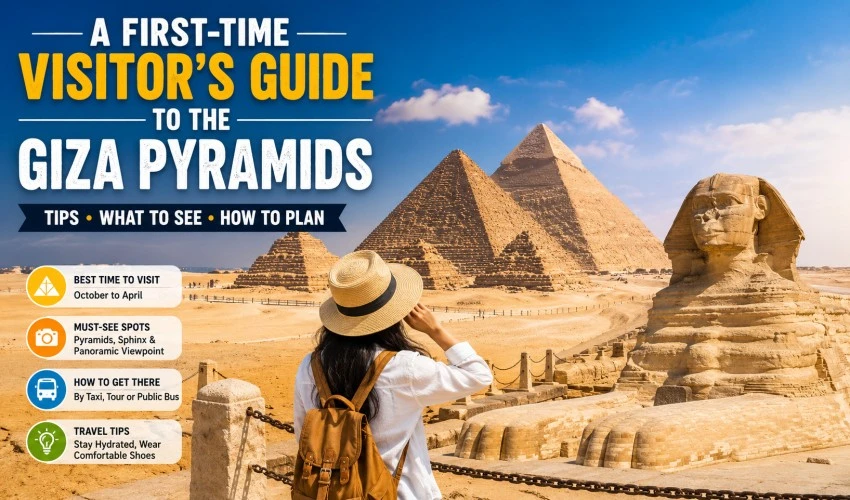
The Giza Plateau is home to three major pyramids: the Great Pyramid of Khufu, the Pyramid of Khafre, and the Pyramid of Menkaure.
The Great Pyramid is the largest and most famous of the three. Built for Pharaoh Khufu during Egypt’s Fourth Dynasty, it was originally significantly taller than it is today. For thousands of years, it was the tallest human-made structure in the world.
Khafre’s pyramid is particularly recognizable because part of its original smooth limestone casing remains near the top. Menkaure’s pyramid is smaller, but its scale and surrounding monuments make it an important part of the plateau.
The area is also associated with the famous Great Sphinx, which sits near the pyramids and is one of the most recognizable monuments of ancient Egypt.
For travelers interested in ancient history, architecture, photography, or simply experiencing one of the world’s most iconic landmarks, Giza is an essential stop.
How Much Time Do You Need?
A common mistake is trying to rush through Giza in an hour or two.
For a first visit, plan for approximately three to five hours. This gives you enough time to explore the main pyramid area, visit the Sphinx, stop at important viewpoints, take photographs, and allow some flexibility.
If you are particularly interested in ancient Egyptian history or want to enter one of the pyramids, you may want to spend even longer at the plateau.
You should also consider the time required to travel between central Cairo and Giza. Traffic can be unpredictable, especially during busy periods.
What Is the Best Time to Visit?
Early morning is generally one of the best choices.
Arriving earlier can mean:
• More comfortable temperatures, particularly during warmer months
• Softer morning light for photography
• A better chance to explore before the plateau becomes busier
• More time to enjoy the site without feeling rushed
Sunrise visits can be particularly beautiful, although opening times and ticket arrangements should always be checked before your trip.
If you are visiting during summer, avoiding the strongest midday heat can make a significant difference to your experience.
Should You Go Inside a Pyramid?
This depends on what you want from your visit.
Seeing the pyramids from outside gives you the full impression of their enormous scale and allows you to appreciate the relationship between the monuments and the surrounding desert landscape.
Entering a pyramid, on the other hand, offers a completely different experience. The passages can be narrow and physically demanding, and the interior is not decorated in the same way as some Egyptian tombs.
For many visitors, entering a pyramid is worth doing once simply because it gives a better understanding of the monument’s internal structure.
However, you don’t need to enter a pyramid to have an unforgettable experience at Giza.
Don’t Forget the Sphinx
The pyramids naturally receive most of the attention, but the Great Sphinx deserves time of its own.
The monument combines the body of a lion with a human head and is traditionally associated with the reign of Pharaoh Khafre. Its enormous scale is difficult to appreciate from photographs alone.
Make sure you allow enough time to walk around the Sphinx area and see it from different viewpoints.
The classic photographs of the Sphinx with a pyramid behind it are among the most recognizable images associated with Egypt.
Best Photography Spots
Giza offers plenty of opportunities for memorable photographs.
Some of the most popular views include:
The panoramic viewpoint:
This provides a wider perspective of the pyramids and is especially useful for seeing how the three major monuments relate to each other.
In front of the Great Pyramid:
Standing close to Khufu’s pyramid gives you a dramatic sense of its size.
The Sphinx area:
This is the place for classic photographs combining the Sphinx and pyramid architecture.
A wider desert viewpoint:
Stepping away from the main monuments can provide a less crowded perspective and better show the relationship between the ancient structures and the surrounding landscape.
If photography is important to you, arriving early can make the experience considerably easier.
What Should You Wear?
Egypt can be hot, particularly from late spring through summer, so comfortable clothing is important.
Choose:
• Lightweight, breathable clothing
• Comfortable walking shoes
• Sunglasses
• A hat or other sun protection
• Sunscreen
• A bottle of water
Comfortable shoes are especially important because you may walk over uneven surfaces and spend several hours outdoors.
It is also a good idea to dress respectfully, particularly if your Egypt itinerary includes visits to mosques, churches, or other religious sites.
Visiting Giza Independently or With a Guide?
Both options are possible.
Independent travelers have the freedom to explore at their own pace, but understanding the history and purpose of the monuments can be more difficult without background information.
A knowledgeable local guide can explain the history behind the pyramids, point out details that are easy to miss, and help organize the timing of the visit.
For travelers with limited time in Cairo, having transportation and a guide arranged in advance can also make the day more efficient.
If you are planning a private Egypt trip, Let’s Explore Egypt Travel can be an option for travelers looking for locally organized experiences and private sightseeing.
What Else Can You Combine With Giza?
One of the advantages of visiting Giza is that it can easily be incorporated into a broader Cairo itinerary.
Depending on how much time you have, you could combine the pyramids with:
- • The Great Sphinx
- • The Grand Egyptian Museum
- • Old Cairo
- • Khan el-Khalili
- • The Egyptian Museum
- • A Nile dinner cruise
A full day can be dedicated to exploring several major Cairo attractions, while travelers with only a short stopover may prefer to focus on Giza and one or two nearby experiences.
If you’re planning your visit specifically around the pyramids, a detailed Giza Pyramids travel guide can help you organize the experience and decide what to prioritize.
How to Make Your Visit Easier
A little planning can save you a lot of time.
Buy or arrange your tickets in advance when possible.
Check the latest ticket information and access rules before visiting because prices and regulations can change.
Start early.
Morning is generally more comfortable and can be less crowded.
Allow extra travel time.
Cairo traffic can be unpredictable, so don’t schedule another important activity immediately after Giza.
Bring water.
The plateau is exposed, and there may be limited shade.
Don’t rush your photographs.
The pyramids look very different from different viewpoints.
Be prepared for the environment.
Giza is an archaeological site, not a modern attraction. Expect sun, dust, uneven ground, and plenty of walking.
Is Giza Worth Visiting?
Absolutely.
The Giza Pyramids aren’t simply another attraction to check off a travel list. Their scale, age, historical importance, and connection to ancient Egyptian civilization make them one of the world’s most extraordinary archaeological destinations.
For first-time visitors, the best approach is to give yourself enough time, arrive prepared for the weather, and avoid trying to see everything in a hurry.
Whether you spend a few hours exploring the plateau or build an entire Cairo itinerary around it, seeing the pyramids in person is very different from seeing them in photographs.
Plan ahead, arrive early, take your time, and enjoy the experience. Giza has been attracting travelers for thousands of years—and for good reason.